

Viet Nam’s economy was one of the poorest in the world when the 20-year Viet Nam War ended in 1975, and growth under the government’s subsequent five-year central plans was anemic. By the mid-1980’s, per capita GDP was stuck between $200 and $300. Today Viet Nam is one of the leading economies in the universe of emerging markets. It has a competitive growth rate of 6 to 7 % competing with the growth likes of other major economies like China & India. So, what has changed with Viet Nam?
The miracle of Viet Nam started in 1986 when the government introduced “Đổi Mới”, a series of economic and political reforms, and steered the country to becoming a “socialist-oriented market economy”. Between 2002 and 2018, GDP per capita increased by 2.7 times, reaching over US$2,700 in 2019, and more than 45 million people were lifted out of poverty. Poverty rates declined sharply from over 70 percent to below 6 percent (US$3.2/day PPP).
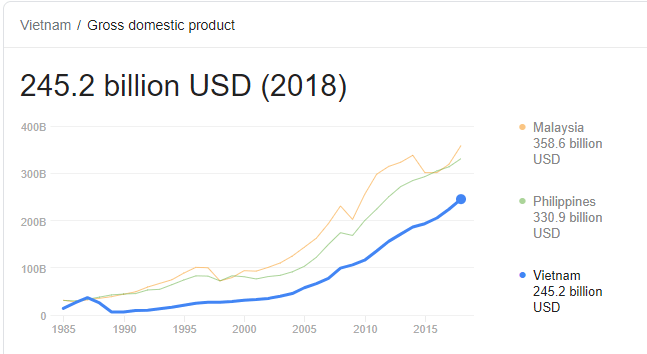
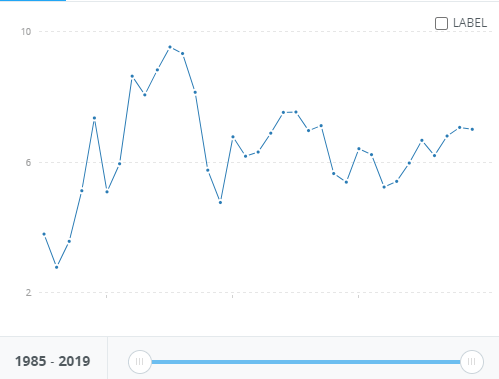
Đổi Mới combined government planning with free market incentives and encouraged the establishment of private businesses and foreign investment, including foreign owned investments. Furthermore, the Viet Nam government stressed the necessity to lower birth rates when developing the economic and social rights of the population by implementing a policy that restricted the number of children per household to two, called the Two Child policy. By the late 1990’s, the success of the business and agricultural reforms ushered in under Đổi Mới was evident. More than 30,000 private businesses had been created, the economy was growing at an annual rate of more than 7%, and poverty was nearly halved.
Throughout the 1990s, exports increased by as much as 20% to 30% in some years. In 1999, exports accounted for 40% of GDP, an impressive performance in the midst of the economic crisis that hit other countries in Asia. Vietnam became a member of the World Trade Organization (WTO) in 2007, which freed Vietnam from textile quotas enacted worldwide as part of the Multi Fiber Arrangement(MFA) in 1974. The MFA placed restrictions on the import by industrialized countries of textiles from developing countries. For China and other WTO members, however, textile quotas under the MFA expired at the end of 2004. A 2019 study found that Vietnam’s WTO entry led to substantial gains in productivity for private firms, but had no impact on state-owned enterprises. In the absence of state-owned enterprises, “the overall productivity gains would have been about 40% larger in a counterfactual Vietnamese economy.”
Development since 1997
While the country shifted toward a more market-oriented economy after 1997, the Vietnamese government still continues to hold over the banking sector and foreign trade. GDP growth fell to 6% in 1998 and 5% in 1999. The economy saw continuous real GDP growth of at least 5% since 2000.
Bilateral Trade Agreement(BTA) between the United States and Vietnam on July 13, 2000, was a significant milestone. The BTA provided for “normal trade relations” (NTR) status of Vietnamese goods in the U.S. market which would attract foreign investment, not only from the U.S., but also from Europe, Asia and other regions.
In 2001, the government approved a 10-year economic plan that enhanced the role of the private sector. Growth then rose to 6% to 7% between 2000 and 2002 even in the midst of the global recession, making it the world’s second fastest-growing economy. In 2003, the private sector accounted for more than one-quarter of all industrial output.
Vietnam had an average GDP growth of 7.1% a year from 2000 to 2004. The GDP growth was 8.4% in 2005, the second-largest in Asia, trailing only China’s. The government estimated that GDP grew in 2006 by 8.17%. Vietnam’s economy continues to expand at an annual rate in excess of 7%, one of the fastest-growing in the world, but it grew from an extremely low base, as it suffered the crippling effect of the Viet Nam war from the 1950’s to the 1970’s, as well as the austerity measures introduced in its aftermath.
In 2012, the communist party was forced to apologize about the mismanagement of the economy after large numbers of SOE’s went bankrupt and inflation rose. The main danger has been over the bad debt in the banks totaling to 15% and forecast growth is 5.2% for 2012 but this is also due to the global economic crisis. The government has launched schemes to reform the economy, however, such as lifting foreign ownership cap from 49% and partially privatizing the country’s state-owned companies that have been responsible for the recent economic downturn. By the end of 2013, the government is expected to privatize 25–50% of SOE’s, only maintaining control on public services and military. The recent reforms have created a major boom in the Vietnamese stock market as confidence in the Vietnamese economy is returning.

Impact of COVID-19
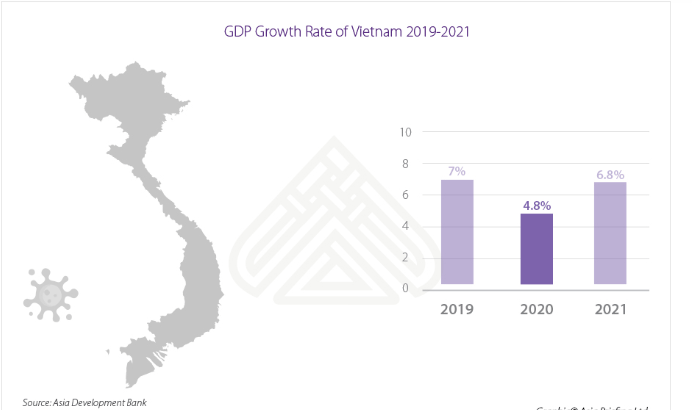
The second outbreak of COVID-19 in March started a new phase in the fight against the pandemic, severely affecting all of Vietnam’s major trading and investment partners. As a result, Vietnam’s GDP fell to 3.8 percent in the first quarter of 2020 compared to 6.8 percent in the same period in 2019.
Regardless of the impact of the COVID-19 pandemic, Vietnam is forecast to be one of the fastest-growing economies in Southeast Asia. Vietnam’s economic growth will decline sharply to 4.8 percent in 2020 but bounce back up to 6.8 percent in 2021, provided the pandemic is contained.
Government strategy to support business activities
According to a survey, the pandemic has had a strong impact on production and business activities. Nearly 85 percent of companies believe that the disease has tightened their consumer markets, while nearly 60 percent of companies have a lack of capital and are subject to reduced cash flow. In the first 3 months of the year, almost 35,000 companies went bankrupt. This is the first time in decades, the number of companies closing down was higher than the number of newly registered companies.
To combat the crisis, the government launched a US$10.8 billion (about 0.4 percent of GDP) credit support package in early March, which includes policies to restructure loan terms and reduce interest rates and fees. In addition, the government has also offered two budget support packages of US$1.3 billion, which include a reduction in taxes and fees for affected companies and an extension of tax payment schedules. Currently, Vietnam still intends to increase these support packages. The State Bank of Viet Nam has also lowered the key interest rate from 0.5 percent to 1 percentage points. The central bank reduced maximum interest rates for deposits in the Vietnamese Dong (VNDs) denominated deposit accounts with maturities of less than six months and the maximum interest rates for short-term loans in VNDs for priority areas.
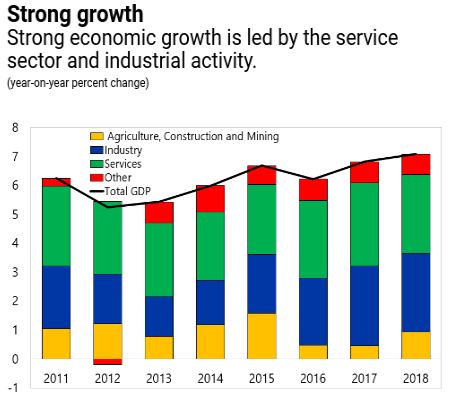
The drivers for economic growth in Vietnam are the emerging middle class, and the rising number of household and small business activities.
Therefore, the domestic business environment is expected to improve rapidly. Government expenditure, which was implemented as a response to the spread of the epidemic, has risen sharply in the first three months of 2020 and will remain so. It is believed that the large number of bilateral and multilateral trade agreements in which Vietnam participates will help to expand market access and also boost the national economy.
Source
https://www.usaid.gov/vietnam/economic-growth-and-trade
https://www.worldbank.org/en/country/vietnam/overview
https://en.wikipedia.org/wiki/Economy_of_Vietnam

 Nerd Economics