

To start off this topic, it is very important for one to understand some key milestones for countries producing oil and what is the current status of their respective economies!
After World war II while the world economy is recovering from the impacts created by the same, Oil exporting has started taking roots in the Middle east. Venezuela, The US and Iran were already the prime producers by then of which the US was already the world’s largest Oil producer and as well the consumer for the same and the world market was dominated by Multinational companies called Seven Sisters as depicted below

During the year 1959 these Organisation of the seven sisters unilaterally cut the prices of Oil of Venezuelan and Middle East supplies which angered these nations who created Maadi Pact or Gentlemen’s Agreement, calling for an “Oil Consultation Commission” of exporting countries to which the Seven sisters must report any changes in the Oil prices but yet the Seven sisters again unilaterally increased the Oil prices in 1960 following which in September 1960 government representatives from Iran, Iraq, Kuwait, Saudi Arabia and Venezuela met and established OPEC(Organization of Petroleum Export Countries) whose headquarter now lies in Vienna, Austria. The leader of this group by default is Saudi Arabia
However, in 1973, OPEC declared significant production cuts and oil embargo against the United States and other industrialized nations due to their support for Israel was a sharp rise in oil prices and OPEC revenues, due to which seven European nations banned non-essential Sunday driving. US gas stations limited the amount of gasoline that could be dispensed, closed on Sundays, and restricted the days when gasoline could be purchased, based on license plate numbers.Even after the embargo ended in March 1974 following intense diplomatic activity, prices continued to rise.
The 1973–1974 oil embargo had lasting effects on the United States and other industrialized nations, which established International Energy Agency. This limited the speed limits of vehicles on highways, smaller, Day light Saving times, reduced usage on Air conditioning, emphasis on other alternative energy sources. These long-term efforts became effective enough that US oil consumption would rise only 11 percent during 1980–2014. But in the 1970’s, OPEC nations demonstrated convincingly that their oil could be used as both a political and economic weapon against other nations, at least in the short term.
There was and is always a debate in the OPEC nations on reducing the overall production of Oil from these nations so that the Oil prices sore and which help in generating more revenues, which is always opposed by some nations as un even distribution of oil makes other economies think of alternate energy sources and hence might reduce the oil prices further
How these Oil prices Impact the Micro Economy of the nations
When gasoline prices increase, a larger share of a families budget is likely to be spent on it, which leaves less to spend on other goods and services. The same goes for businesses whose goods must be shipped from place to place or that use fuel as a major input like the airline industry which would depend on lower fuel prices. Higher oil prices tend to make production more expensive for businesses, just as they make it more expensive for households to do the things they normally do

How these Oil prices Impact the Macro Economy of the nations
In terms of inflation, oil prices directly affect the prices of goods made with petroleum products. As mentioned above, oil prices indirectly affect costs such as transportation, manufacturing, and heating. As producers may pass production costs on to consumers costs of other products can also be increased. In economics terminology, high oil prices can shift up the supply curve for the goods and services for which oil is an input. One way to analyze the effects of higher oil prices is to think about the higher prices as a tax on consumers
What effects does Oil price increase have on other nations who mainly export
Due to the heavy reliance on imported oil and gas, the impact of rising world oil prices has significantly increased the oil import bill. This is the key factor that is driving the deterioration in the nation’s trade position. The rising oil imports may also hit the nations gross domestic product as well as the Oil import bill of the nation raises which would be passed on to the consumers who had to drop more billets from their pockets which would impact their overall GDP
Due to higher Oil prices even the jobs on the economy would be impacted as industries try to minimize loses with production cuts which results in loss of jobs
This would also impact jobs in the Oil industry as well
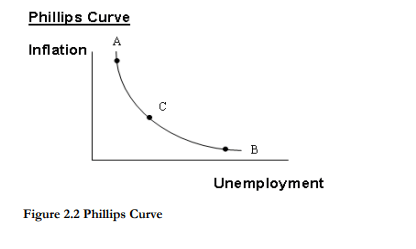
As per the Philips curve stated below When unemployment is high, inflation is low and when inflation is high, unemployment is low. It is important to note that the relationship can only be verified in the short run.
Conclusion: Well not always all the economies grow with a surge in Oil prices, there are always several external factors impacting. For example taking the case of Venezuela, even though it has the world’s highest proven oil reserves, it is now one of the poorest economies with Hyper inflation and not been able to feed its own people. There are several external factors for this like the countries dependency on Oil rather than on other income generating sources and also for countries like Iran, Economic sanctions imposed by the US because of which most nations cant purchase the produced Oil. So to say in brief, its not just the Oil prices but several other external factors impact a nations growth

 Nerd Economics